
Wedding budget
Wedding Flower Budget: 7 Ways to Spend More Wisely
Plan wedding flowers around the moments that matter, then compare designs and complete service costs before booking.
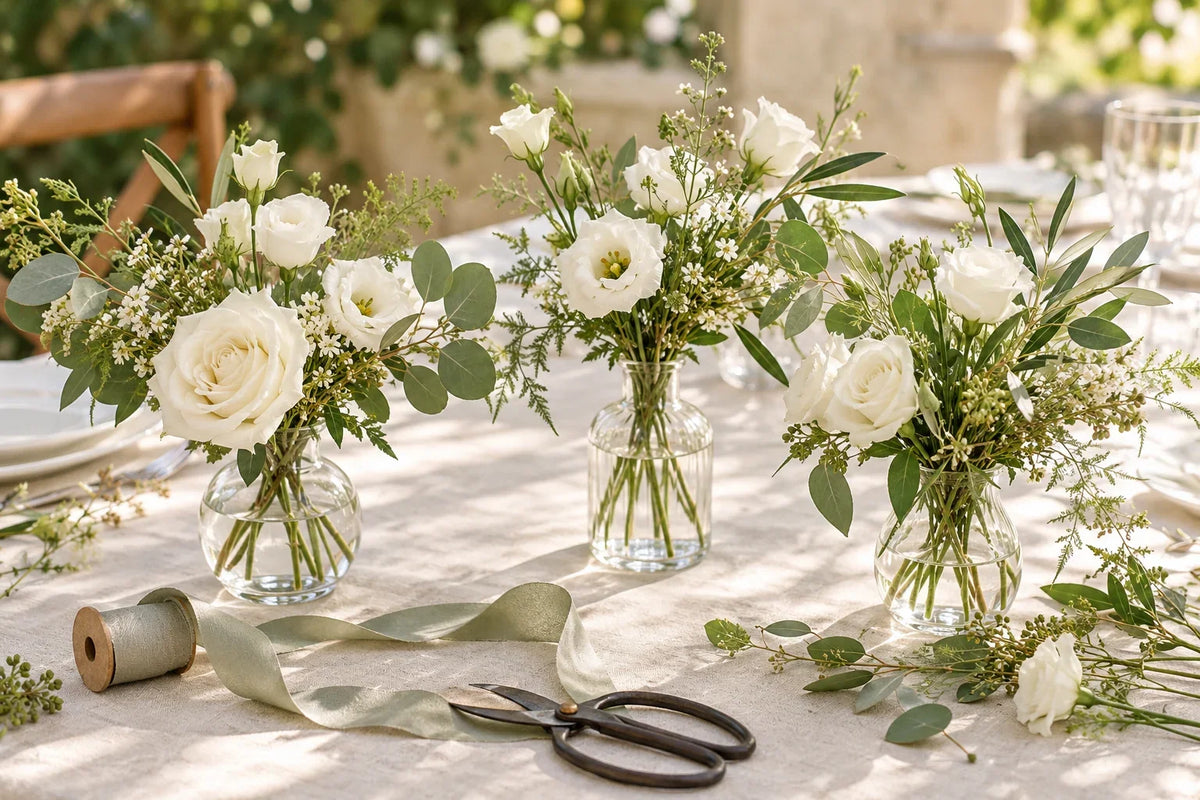
Build your wedding flower budget by choosing the arrangements that matter most, then requesting complete florist quotes for that scope. There is no single flower price that fits every location, season, design and level of service.
A smaller list of thoughtful arrangements can be more useful than stretching a fixed budget across every possible surface. These seven choices help you discuss the options clearly.
1. Pick your three floral priorities
Choose the places you want flowers to make the greatest impact: perhaps your bouquet, ceremony backdrop and dining tables. List other items as optional so the florist can show what fits before you commit.
Separate personal flowers, ceremony arrangements and reception arrangements in your notes. This makes it easier to see whether an extra design supports a priority or simply adds another line to the bill.
2. Share a real spending limit
Tell the florist your total available amount and whether it must include delivery, setup and collection. Share inspiration as a guide to shape and feeling, then ask what is achievable within that amount. A photograph alone cannot explain the labor or structure behind an installation.
3. Ask for flexible flower choices
Describe the colors, texture and overall style you like. Ask the florist which available flowers can create that effect. If one particular bloom is essential, mark it clearly and allow flexibility elsewhere. Seasonal does not automatically mean cheapest; compare the actual proposal.
4. Compare arrangements, not just stem counts
Request sizes, quantities and placement details. For table flowers, consider sightlines, tableware and the space needed for serving dishes. A smaller arrangement that suits the table may work better than a crowded design.
Ask about vase hire, support structures and any return requirements. Photographs of comparable work can help explain scale without expecting an exact copy of another couple's wedding.
5. Reuse flowers only with a working plan
Ask whether a ceremony arrangement can safely move to the reception. Confirm who moves it, when they have access and whether it will fit its second location. Include any labor fee. Reuse needs to work for the flowers and the schedule, rather than becoming a last-minute task for guests.
6. Check the complete florist quote
A fictional proposal might include $250 for personal flowers, $300 for table arrangements, $200 for ceremony flowers, $150 for delivery and setup, and $100 for collection: $1,000 total before any additional charges. Those are example figures, not market prices.
If the budget is $800, ask which scope changes remove $200 while preserving your priorities. Record the revised total in your wedding budget spreadsheet instead of assuming a discount.
7. Price DIY honestly
Include containers, tools, storage, transport, workspace and the time to prepare everything. Try one sample arrangement before committing to an entire reception. A limited DIY element can be manageable; a complex installation needs appropriate expertise and venue approval.
Confirm delivery and collection in your wedding vendor checklist. A clear handover lets the flowers arrive without becoming another job on the wedding morning.
Further reading: Hitched's guide to choosing wedding flowers.


